

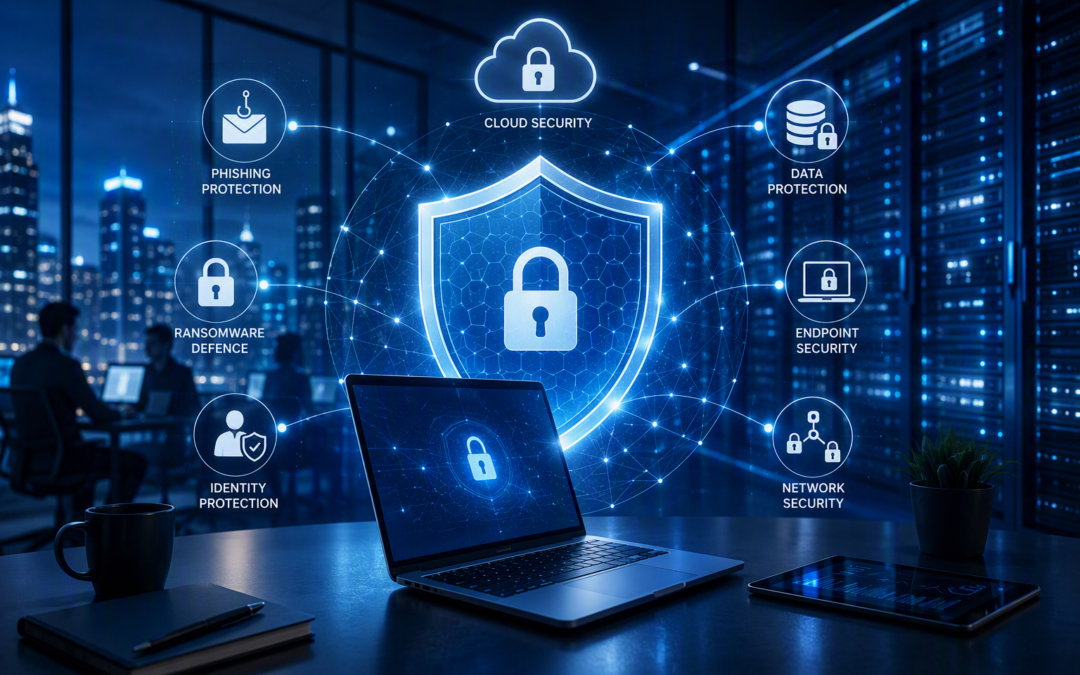
Why Your Business Needs Cyber Security: Is Your Data Really Safe?
Cyber attacks are becoming more sophisticated, more frequent, and harder to detect. Ransomware can lock an entire business out of its own systems in minutes. Phishing emails are now convincing enough to fool even experienced staff. Data breaches expose sensitive customer and financial information overnight, and AI-powered scams are making these attacks faster and more targeted than ever before.
For South African businesses of every size, one truth is becoming impossible to ignore: cyber security is no longer optional.
Explore Cyber Security Services Contact Introstat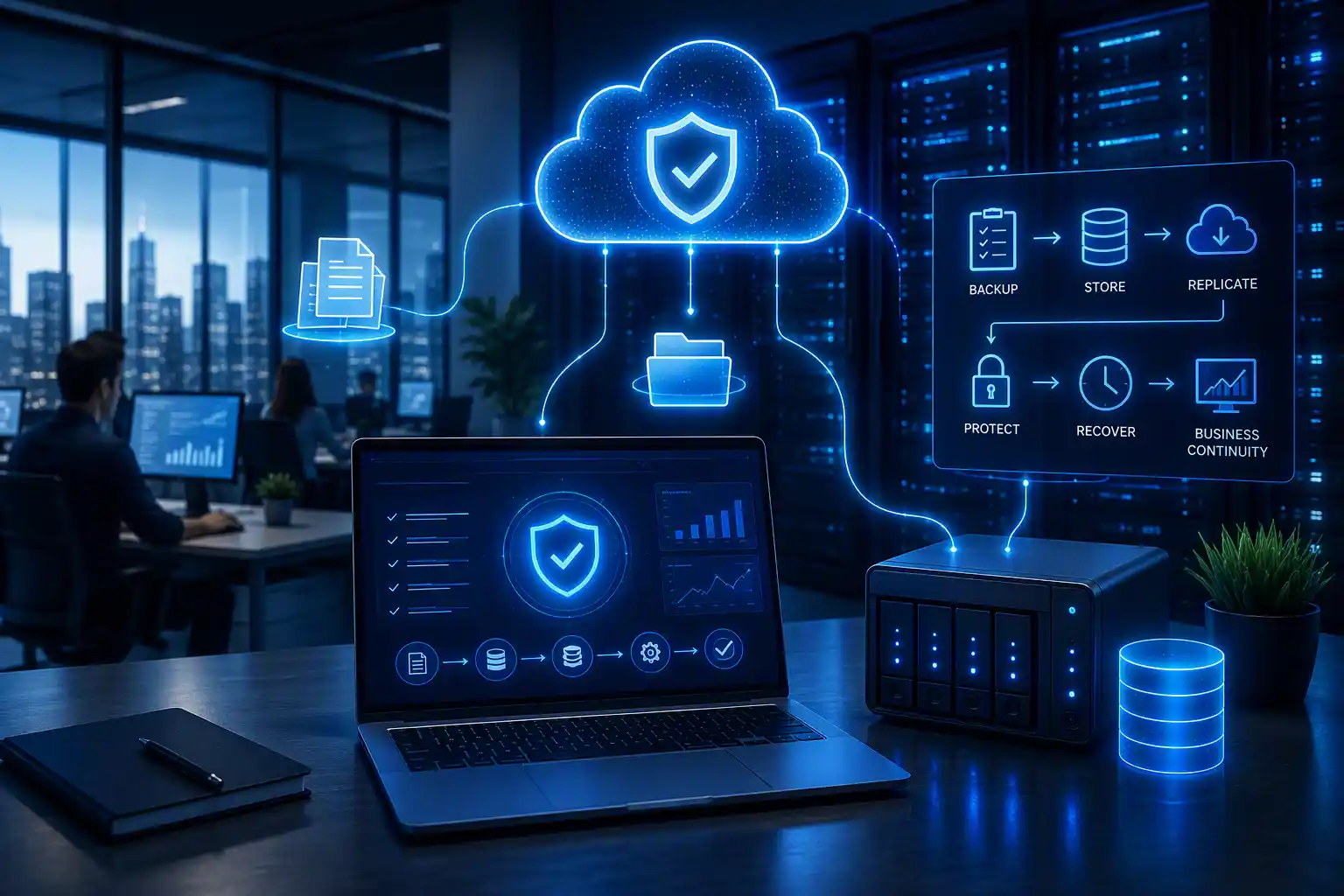
Every Business Is a Target
Many business owners assume cyber criminals only go after large corporations. In reality, small and medium-sized businesses are targeted just as often, and sometimes more, because they typically have fewer defences in place.
Most attacks today are automated. Cyber criminals use tools that scan thousands of businesses at once, looking for outdated software, weak passwords, unprotected email accounts, or missing security controls. This means an attack is rarely personal. It is opportunistic, and it can happen to any business, in any industry, regardless of size.
No company is too small to be worth attacking. If a business stores customer data, processes payments, or relies on email and cloud systems to operate, it is a potential target.
Is Your Data Really Safe?
Most businesses hold far more sensitive data than they realise, and much of it would cause serious harm if lost, stolen, or exposed. This includes:
- Customer records and contact details
- Employee information and payroll data
- Financial records and banking details
- Contracts and confidential agreements
- Microsoft 365 mailboxes and shared files
- Cloud applications and business systems
- Intellectual property and proprietary information
Business owners are often confident their data is protected, but confidence is not the same as certainty. Use this quick checklist to see how many of these questions you can answer with a firm "yes":
Security Checklist
- Are your backups actually tested, not just running?
- Is Multi-Factor Authentication (MFA) enabled on all critical accounts?
- Do staff receive regular cyber security awareness training?
- Is your business email protected against phishing and spoofing?
- Could your business recover quickly after a ransomware attack?
- Are user access rights reviewed and properly managed?
If you are unsure of the answer to even one of these questions, it is worth finding out before a cyber criminal finds out for you. Understanding exactly where your business stands is the first step toward closing the gaps.
The Most Common Cyber Threats Facing Businesses Today
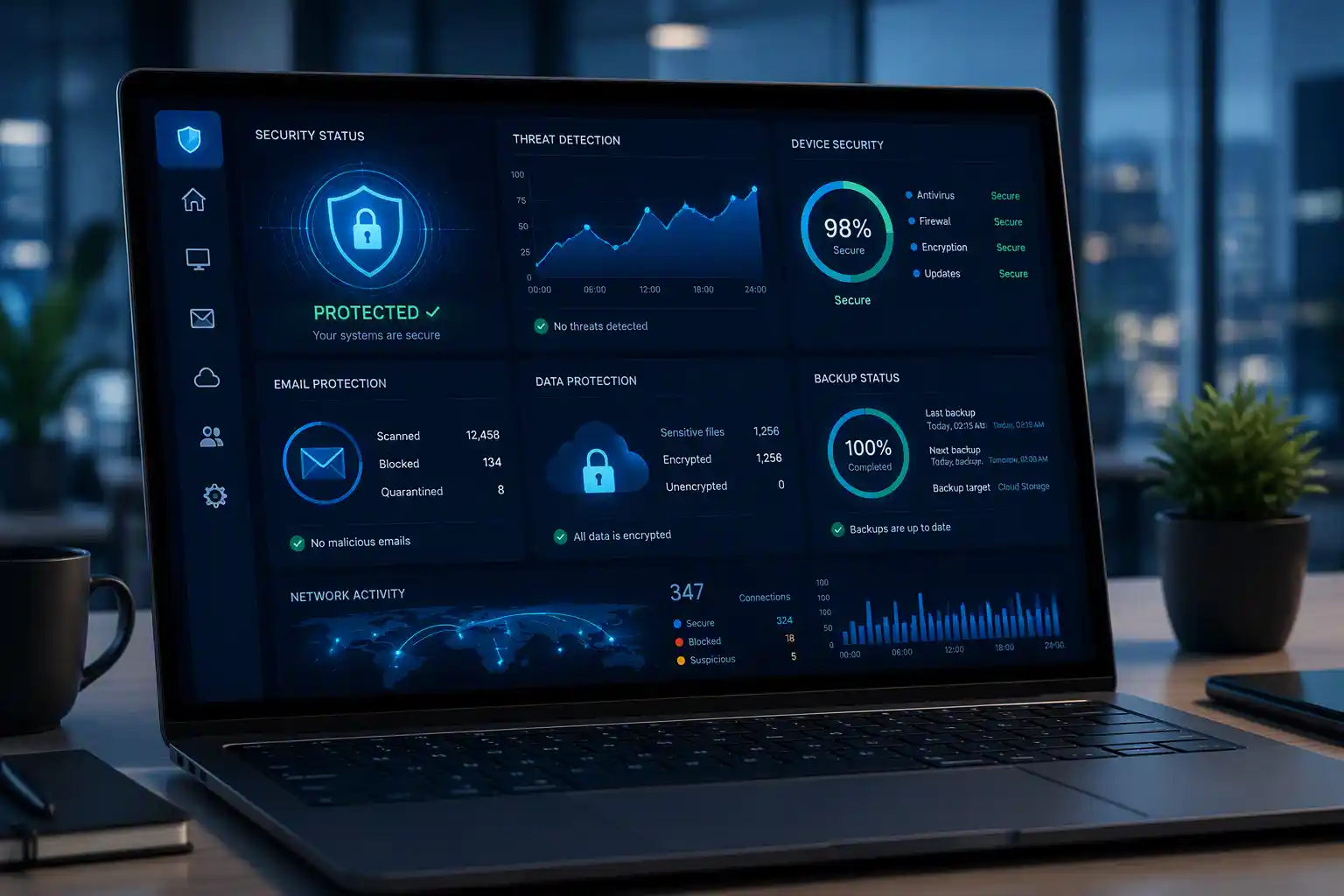
Understanding the threats your business faces makes it far easier to prioritise the right protection. Here are the risks businesses encounter most often.
Phishing Attacks
Fraudulent emails or messages designed to trick staff into clicking malicious links, downloading infected attachments, or handing over login details. Phishing remains the most common way attackers gain initial access to a business.
Ransomware
Malicious software that encrypts business files and systems, making them completely inaccessible until a ransom is paid. The result is often days of downtime, lost revenue, and, in some cases, permanent data loss even after payment.
Business Email Compromise
Attackers impersonate executives, suppliers, or staff to trick employees into approving fraudulent payments or changing banking details. These scams can result in significant, and often unrecoverable, financial losses.
AI-Powered Attacks
Cyber criminals now use AI to write more convincing phishing emails, clone voices, and automate large-scale attacks. This makes scams harder to spot and far more difficult for employees to detect using judgement alone.
Data Breaches
When sensitive business or customer data is exposed or stolen, the damage goes beyond the data itself. Reputational harm, loss of customer trust, and regulatory consequences often outlast the technical impact of the breach.
Insider Threats
Not every risk comes from outside the business. Human error, weak passwords, and poor security habits among staff can unintentionally open the door to an attack, even without any malicious intent.
Cyber Security Is More Than Antivirus
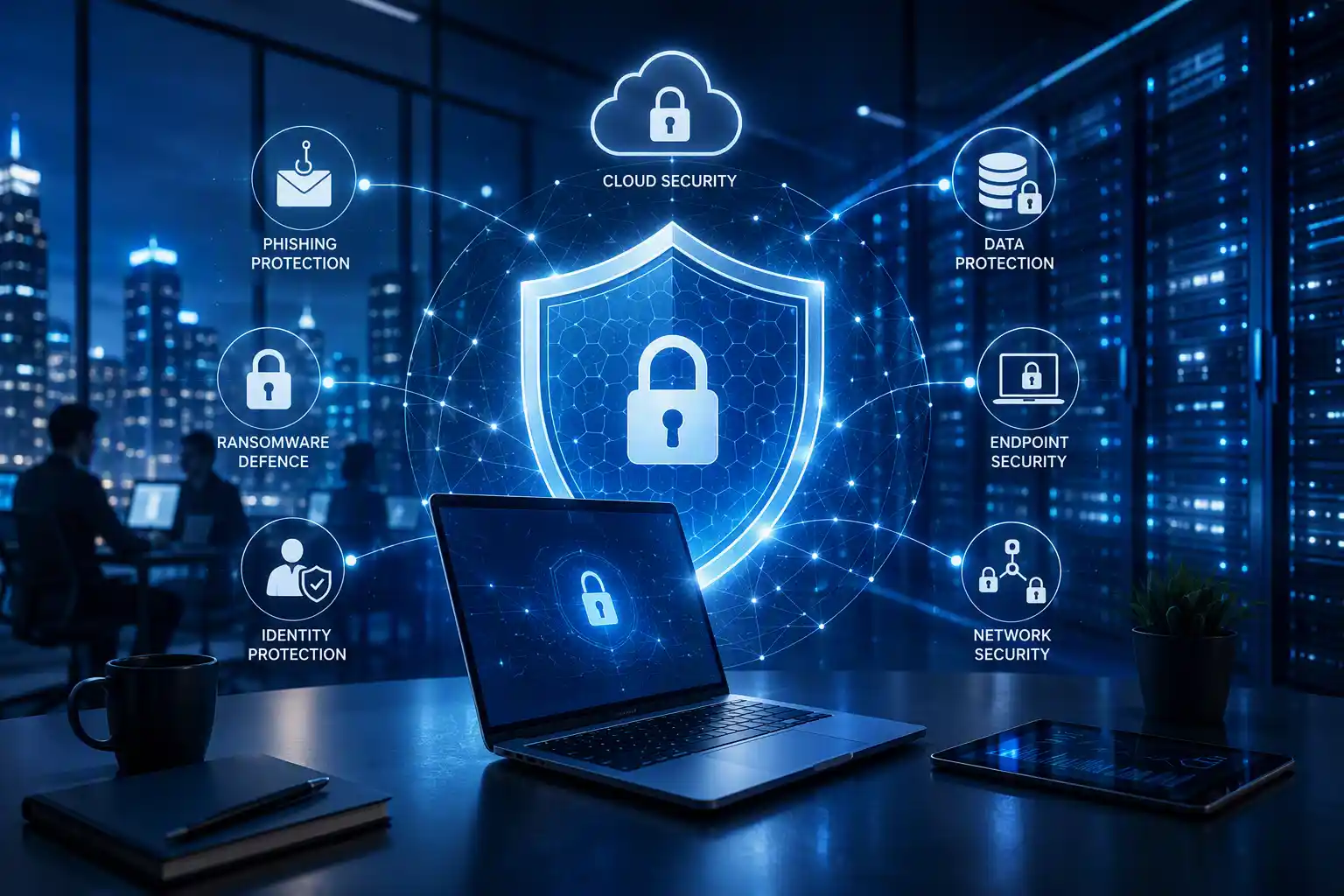
Many business owners still think of cyber security as simply installing antivirus software. Modern threats require a layered approach, where multiple protections work together to reduce risk at every level of the business.
Email Security
Filters out phishing attempts, spam, and malicious attachments before they ever reach staff inboxes.
Endpoint Security
Protects laptops, desktops, and mobile devices from malware, ransomware, and unauthorised access.
Network Security
Monitors and controls traffic moving in and out of the business network to block suspicious activity.
Cloud Security
Secures Microsoft 365, cloud storage, and business applications against unauthorised access.
Data Security
Protects sensitive business and customer information from loss, theft, or unauthorised exposure.
24/7 Threat Monitoring
Continuously watches for unusual activity, so threats can be identified and contained before they escalate.
Introstat's Cyber Security Services and Data Security Services combine these layers into a single, coordinated approach to protecting your business.
Remediation and Recovery: What Happens After an Attack
No business can guarantee an attack will never happen. That's why remediation and recovery are just as important as prevention. If a threat does get through, the speed and quality of your response can be the difference between a brief disruption and a business-critical crisis.
Introstat's cyber security offering includes remediation and recovery support, helping businesses contain an incident, restore operations, and strengthen their defences so the same vulnerability can't be exploited again.
Incident Containment
Isolating affected systems quickly to stop an attack from spreading further across the network.
System Remediation
Removing malware or unauthorised access and closing the specific vulnerabilities that were exploited.
Data Recovery
Restoring systems and files from secure backups to get the business operational again with minimal data loss.
Post-Incident Hardening
Reviewing what happened and reinforcing defences to reduce the risk of a repeat attack.
Speak to Introstat about building remediation and recovery into your Cyber Security Services, so your business is prepared before an incident happens, not after.
How Managed IT and Cyber Security Work Together
Cyber security is most effective when it forms part of a broader IT strategy, not something bolted on separately. Businesses that treat IT support and security as a single, connected function are far better positioned to prevent and respond to attacks.
| Without Managed IT | With Managed IT |
|---|---|
| Reactive support, only responding once something has already gone wrong | Proactive monitoring that identifies issues before they cause downtime |
| Delayed software and security updates | Consistent, timely security patching |
| Limited visibility into systems and potential risks | Continuous visibility across the business environment |
| Uncertainty over whether backups actually work | Regularly tested, reliable backups |
| Higher risk of extended downtime after an incident | Better resilience and faster recovery |
A well-managed IT environment is the foundation that makes strong cyber security possible. Explore Introstat's Managed IT Services to see how proactive support and security work together.
Why Data Security Matters
Cyber security stops attackers from getting in. Data security protects what happens to your information even if a threat gets through, and both are essential for a business to operate with confidence.
- Customer trust: Clients expect their information to be handled responsibly and kept secure.
- Regulatory compliance: Businesses have legal obligations around how personal and financial data is stored and protected.
- Data loss prevention: Strong data security reduces the risk of information being lost, corrupted, or stolen.
- Business continuity: Protected, recoverable data means the business can keep operating even after an incident.
- Operational efficiency: Well-managed data is easier to access, use, and rely on across the business.
Learn more about how Introstat helps businesses protect what matters most through Data Security Services.
7 Essential Cyber Security Actions Every Business Should Take
Improving your business's security posture does not have to happen all at once. These seven actions offer a strong, practical starting point.
Enable Multi-Factor Authentication
Adds a critical extra layer of protection, so a stolen password alone is not enough to access business systems.
Train Employees
Regular awareness training helps staff recognise phishing attempts and avoid common security mistakes.
Monitor Network Activity
Ongoing monitoring helps identify unusual behaviour before it develops into a full-scale incident.
Keep Systems Updated
Applying updates and patches promptly closes known vulnerabilities that attackers frequently exploit.
Test Backups
Backups are only useful if they actually work. Regular testing confirms data can genuinely be restored.
Limit User Access
Staff should only have access to the systems and data required for their role, reducing overall exposure.
Implement Threat Monitoring
24/7 monitoring allows threats to be detected and contained early, before they cause significant damage.
Cyber Security Services Available Across South Africa
Introstat provides cyber security and managed IT support to businesses nationwide, with a presence in Johannesburg, Pretoria, Durban, Cape Town, Mbombela, Polokwane, and Gqeberha.
Wherever your business operates, our team can help assess your environment, close security gaps, and implement the right level of protection for your organisation. Find your nearest office on our Branches page.
Frequently Asked Questions
Cyber security can seem complicated, especially for business owners focused on running their organisation every day. Below are answers to some of the most common questions businesses ask.
Does a small business need cyber security?
Yes. Small businesses are frequently targeted because they often have fewer defences in place than larger organisations. Attackers rely on this, making cyber security just as important for SMEs as it is for large enterprises.
Can cyber security prevent ransomware attacks?
Strong cyber security significantly reduces the risk of ransomware by blocking common entry points such as phishing emails and unpatched software. No solution can guarantee complete prevention, which is why tested backups and a recovery plan remain essential.
What is Multi-Factor Authentication (MFA)?
MFA requires users to verify their identity using more than just a password, typically through a code, app, or biometric check. It is one of the simplest and most effective ways to stop unauthorised access to business accounts.
How often should business backups be tested?
Backups should be tested regularly, not just relied upon in theory. Many businesses only discover their backups have failed when they try to use them during an actual emergency, which is a risk that regular testing eliminates.
What does a Security Operations Centre (SOC) do?
A SOC monitors a business's systems and network around the clock, looking for suspicious activity and potential threats. If a risk is detected, the SOC team can respond quickly to contain it before it causes serious damage.
What are the warning signs of a phishing email?
Common warning signs include urgent or threatening language, unexpected requests for payment or login details, unfamiliar sender addresses, and links or attachments you were not expecting. When in doubt, staff should verify the request through a separate, trusted channel.
How do I know if my business is secure?
The clearest way to know is through a proper security assessment of your systems, backups, and processes. Without this, most businesses are only assuming they are protected rather than confirming it.
What is the difference between cyber security and data security?
Cyber security focuses on preventing attackers from gaining access to your systems in the first place. Data security focuses on protecting the information itself, ensuring it stays safe, private, and recoverable even if other defences are tested.
If you still have questions about your organisation's cyber security posture, the Introstat team can help assess your environment and recommend practical ways to reduce risk and improve resilience.
Is Your Business Prepared for the Next Cyber Attack?
Cyber security is a business issue, not only an IT issue. Prevention is almost always cheaper than recovery, downtime is expensive, and customer trust, once lost, is difficult to rebuild.
Related Services:
Cyber Security Services |
Managed IT Services |
Data Security Solutions |
Introstat Branches |
Contact Introstat
The best time to identify a security weakness is before a cyber criminal finds it. Speak to Introstat today and take a proactive approach to protecting your business, your employees and your customers.
Contact Introstat Explore Cyber Security Services